
Legal Process Flowchart
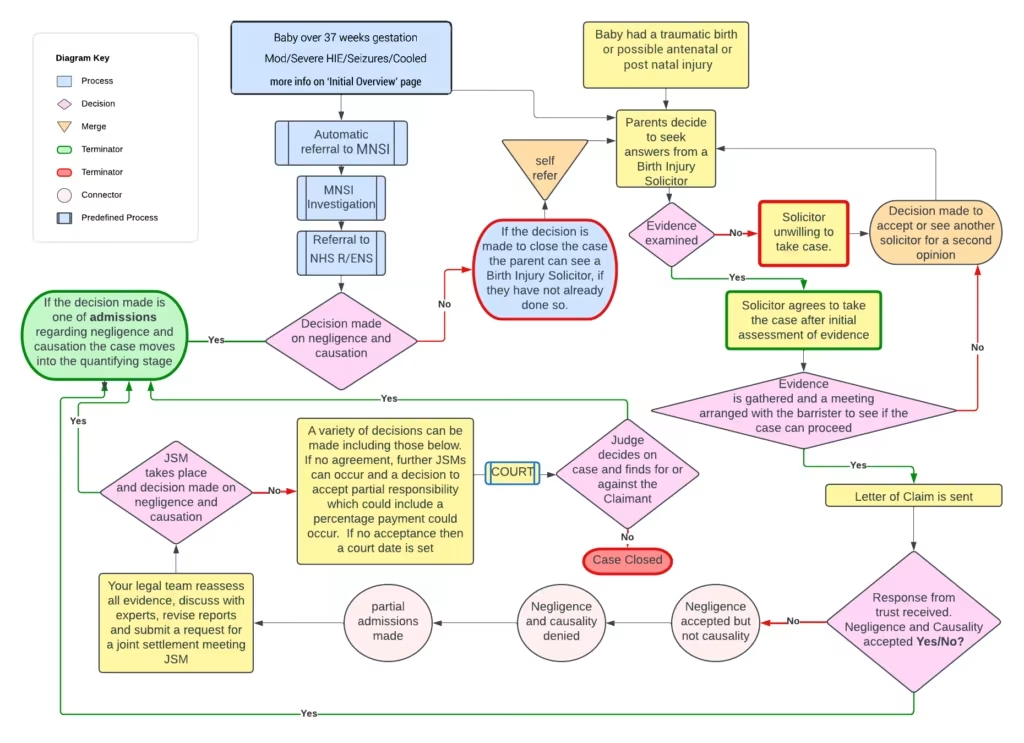
Click on the image to expand on desktop
If NHS Resolution’s Early Notification Scheme (ENS) investigation finds that the legal test for clinical negligence is met, the case can move into the compensation process and NHS Resolution aims to make prompt payments where possible to help with immediate care needs. I’ve heard of cases being admitted within 2–3 years, but an admission is only the beginning of the compensation process. There may still be issues to resolve around the extent of liability and the amount of compensation, and a stay may be required. It is a relatively new system, so many families also choose to consult a specialist birth injury solicitor for independent legal advice. NHS Resolution itself strongly recommends independent legal advice where clinical negligence is identified.
This flowchart shows a simplified version of the litigation process, but one which many cases will broadly follow, with some deviations. The process can take many years in complex birth injury cases, with a shorter route possible where negligence and causation are admitted through the Early Notification Scheme. There can be many months between each stage. Collecting expert witness reports can easily take a considerable amount of time, especially if the expert is in a very small field of expertise. The Defence may then need to obtain its own expert evidence, although where the ENS has already investigated the case, relevant evidence may already be available.
It’s a good idea to ask your solicitor when the next part of the process is likely to occur. Make a note in your diary and forget about it. Emotionally, it is just too difficult to concentrate on the case all the time, so letting it run its course in the background is often the best way to cope.
Towards the end of the case, you often find it gets quite confusing. There can be one Joint Settlement Meeting or more. You can have an admission of negligence but they deny that the negligence caused the injury, or they may accept that the negligence caused some of the injury but not all of it. It can go all the way from admitting everything to denying everything. If the latter occurs, or they admit negligence but deny it caused the injury, your legal team will reassess your case and may ask for a court date to be set if there is a stalemate with the Defence.
These cases often settle before they reach court because litigation is expensive and the civil justice system encourages parties to consider Alternative Dispute Resolution (ADR), including settlement discussions and other forms of dispute resolution. NHS Resolution actively aims to resolve claims without the need for court proceedings. However, some cases do go to trial, and in that situation your solicitor and barrister will advise you about the court proceedings and the risks involved.
For an overview of the process during legal cases relating to birth injury, click on Legal Overview
For more information on what the different bodies (eg ENS, MNSI, NHSR) do and how they conduct the case click on the link for Legal Agencies
For information of the Legal Principles of Negligence (Negligence Chain ) necessary to pursue a claim, click on the link below